Any product you wear on your skin for days at a time deserves a quick safety check. This guide covers the side effects that are realistic for a supplement patch like P-Protect, the medications worth asking about, and a simple way to test your skin before committing. For the full product overview, see our P-Protect review.
The most likely side effect: skin irritation
With nearly every adhesive patch — nicotine, pain relief or supplement — the most common complaint is local skin reaction. That can look like:
- Mild redness or a faint square/circle outline after removal
- Itching under or around the patch
- Dry or flaky skin where the patch sat
- Less often, a raised, itchy rash (contact dermatitis) from the adhesive
Mild redness that fades within a few hours is common with adhesives. A rash that spreads, blisters, or persists for more than a day is a reason to stop and contact the seller (and a doctor if it's significant).
Why ingredient interactions are harder to judge
The seller describes P-Protect as "naturally formulated" but does not publish a full ingredient list on its sales pages (we cover this in P-Protect ingredients). That matters because some herbs commonly used in prostate products can interact with medicines. For example, saw palmetto has been reported to potentially affect bleeding risk, and some botanicals have hormonal activity.
Without the label, nobody can say for certain whether any of these apply. That's why we recommend getting the full label from customer support and showing it to a pharmacist if you take:
- Blood thinners or daily aspirin
- Hormone therapy, or BPH medicines such as finasteride, dutasteride or tamsulosin
- Blood-pressure medication
- Other medicated skin patches
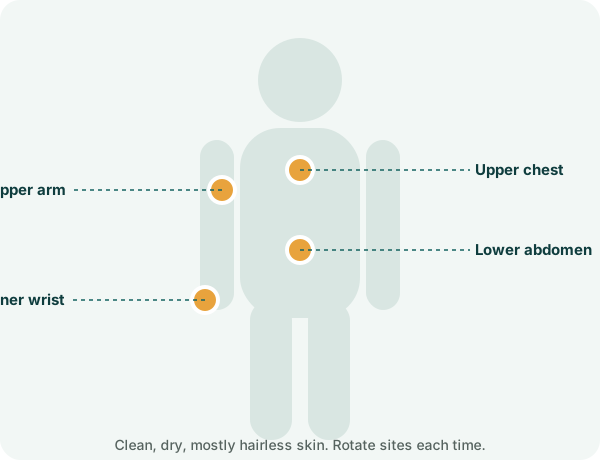
How to patch-test before your first full use
- Pick a small, clean area of skin on your inner forearm.
- Apply one patch as directed and leave it for a few hours.
- Remove it and check the skin right away and again the next day.
- If there's no more than faint, fading redness, continue as the package directs. If you see a rash, stop.
Our step-by-step guide to applying the patch covers placement and rotation in more detail.
Who should skip it or ask first
- Anyone under 18 — it is marketed to adult men only.
- Men with eczema, psoriasis, or known adhesive allergies.
- Anyone with new urinary symptoms that haven't been evaluated — see BPH symptoms: when to see a doctor.
Bought from the official website? You're covered by the 60-day guarantee if the patch doesn't suit you.
See the official offerIf a side effect happens
Remove the patch, wash the area with mild soap and water, and don't reapply to irritated skin. Keep your order number and contact the seller — if you're within the window, our refund policy guide explains how to claim. Seek urgent care for any severe reaction such as facial swelling or difficulty breathing.
Frequently asked questions
Does P-Protect cause skin irritation?
Adhesive patches can cause mild redness or itching in some people. Rotate application sites and stop using it if a rash develops.
Can I use P-Protect with prescription medication?
Ask a pharmacist first. The full ingredient list isn't published on the sales page, so get the label from the seller and have it checked against your medications.
This article is for general information and isn't medical advice. P-Protect has not been evaluated by the FDA and is not intended to diagnose, treat, cure or prevent any disease. Affiliate disclosure.