Supplement patches like P-Protect are built on a real, decades-old technology. But "it's a patch" doesn't automatically mean "it absorbs." Here's how transdermal delivery works and what limits it.
The basic idea
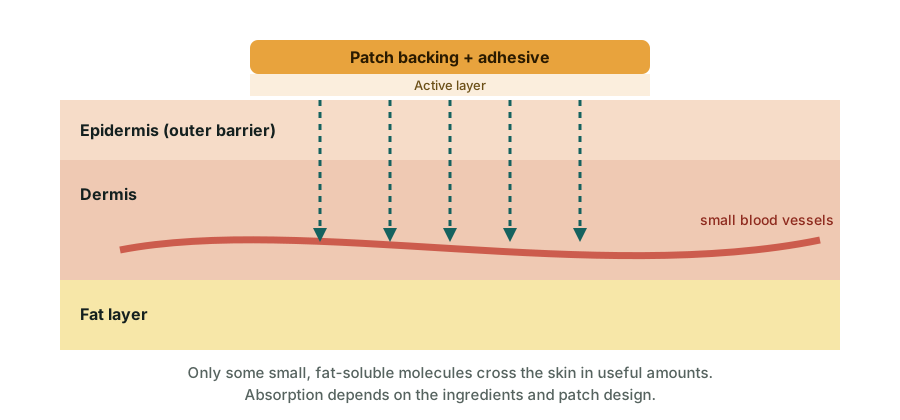
A transdermal patch holds an active layer against your skin. Over hours or days, molecules diffuse out of the patch, through the outer skin barrier (the stratum corneum), into the deeper dermis, where small blood vessels can carry them into circulation.
Where patches work well
Doctors have used prescription patches for decades — nicotine, certain hormone therapies, some pain and motion-sickness medicines. These drugs share traits that make skin delivery possible:
- Small molecules — a common rule of thumb is under about 500 daltons
- Balanced solubility — able to dissolve in both fat and water
- Potent at low doses — so a small amount through the skin is enough
The challenge for herbal patches
Botanical extracts are often mixtures of many larger compounds, and the doses used in oral supplements are typically measured in hundreds of milligrams. Getting meaningful amounts of those through skin is much harder than with a potent prescription drug. That doesn't rule out a benefit — but it's why ingredient choice and patch design matter, and why we keep asking for P-Protect's full ingredient list.
Real advantages of the format
- No swallowing or meal timing
- Bypasses the digestive system
- Steady, slow release rather than a spike
- Easy to remember — no daily pill count
Real downsides
- Skin irritation from adhesive (see side effects)
- Patches can lift with sweat or friction
- Limited published research on herbal transdermal products
Getting the most from any patch
Good skin contact is everything. Our application guide covers placement and adhesion, and our patch vs. saw palmetto comparison helps if you're still deciding on format.
Curious about the patch format? See the current offer on the official website.
View offerFrequently asked questions
Do supplement patches actually absorb?
Some compounds cross skin well and many don't. It depends on molecule size, solubility and dose, which is why the specific ingredients matter.
Are patches better than pills?
They're different. Patches avoid swallowing and digestion; pills are usually cheaper and better studied for herbal ingredients.
This article is for general information and isn't medical advice. P-Protect has not been evaluated by the FDA and is not intended to diagnose, treat, cure or prevent any disease. Affiliate disclosure.